

Be it machine learning models, digital marketing campaigns or process optimization you know the appropriate fine tuning techniques will greatly enhance performance, save resources and have quantifiable results. We know that in Workvix.com, accuracy is all you need and the correct attitude can help you to change your mediocre results to outstanding ones.
This is a guide to seven effective fine tuning techques that can be used to increase accuracy, efficiency, and ROI. At the conclusion of this article, you will have some working strategies, which you can apply at once, regardless of your position, as a business owner, data scientist, or digital marketer.
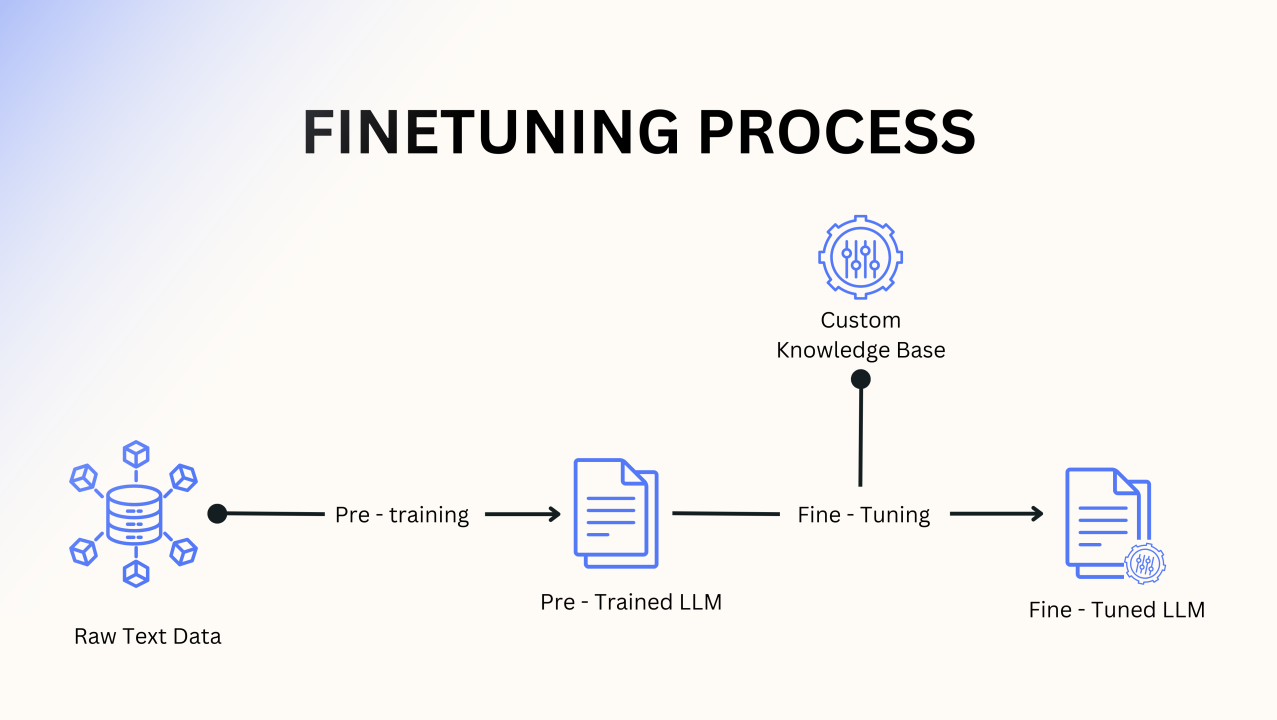
The reason why Fine Tuning Techniques are more important than ever.
The world has become data based and rapid and it implies that minor mistakes or inefficiencies can straight away cost that much. Fine-tuning Finemaking of fine adjustments to enhance the performance, be it an algorithm, a campaign, or an operational workflow.
This is the reason why fine tuning techniques are important today:
- Increased Accuracy: Fine-tuning makes the models, systems, and processes work closer to the ideal condition.
- Cost Effectiveness: You can save resources by making small changes which would make your work a cheaper one.
- Competitive Advantage: This is because a business using the appropriate techniques will be ahead of their competitors.
- Scalability: Fine-tuned systems scale better since they can do their tasks efficiently with less errors.
Keeping these advantages in minds, we can discuss the methods which can make you earn these achievements.
Machine Learning Hyperparameter Optimization.
Hyperparameter optimization is one of the most popular methods of fine-tuning. This includes optimizing such parameters as learning rate, batch size, and the number of layers to obtain the best results.
Best Practices of Hyperparameter Tuning.
- systematic search through parameter combinations Search parameter combinations using grid search or random search.
- Bayesian optimization would be smarter when it comes to search patterns.
- Check results using cross-validation in order to prevent the overfitting.
In Workvix, we will propose to begin with automated systems such as Optuna or Hyperopt that will greatly speed up the tuning.

A/B Testing and Fine-Tuning of the Campaign.
A/B testing is an inseparable method in marketing and digital advertising. It assists in refining every ad copy to the landing page design.
The A/B Testing Implementation.
- One variable should be tested at a time to determine its influence.
- Statistically significant periods should be run tested to have the correct results.
- Make decisions, which are supported by data analytics.
As part of other methods of fine tuning, A/B testing will make sure that your marketing campaigns remain up-to-date and provide optimal conversions.
To have more data-driven strategies in marketing, visit StudyCreek.com- a site that provides information to both students and marketers.
Adjustment of Model and Weights.
It is essential to regularize AI or machine learning models when fine-tuning them. Such methods as L1 and L2 regularizations assist in avoiding overfitting by penalizing excessively complicated models.
Tips on effective regulations:
- The neural networks should use dropout layers to avoid the dependency between certain nodes.
- But create changes gradually instead of making drastic changes.
- Close monitoring validation loss in training, in order to prevent underfitting.
Such fine tuning techniques is crucial to those who want to have strong and generalized models.
SEO Keyword and Content Optimization.
Fine-tuning is not only applied to algorithms, but also content. Optimization of keyword makes sure your articles and web pages are ranked higher in the search engines.
Steps for SEO Fine-Tuning
- Find key primary and secondary keywords having a high search intent.
- Spread out the keywords in a natural way with 1.5 percent of key-word density.
- Efficiencies on meta titles, description, header and alt text.
As an example, the keyword fine tuning techniques has been strategically placed in this article so that it is indexed by the search engine but the content is natural and made to be interesting.
In case you work on the academic projects, the help of DissertationHive.com can be a useful investment of the well-organized research assistance that could receive the assistance of the SEO measures as well.
Monitoring of Performance and Revising.
Any fine-tuning process is dependent on continuous monitoring. Nothing can be measured to be improved.
Tools and Methods
Monitor KPIs on the analytics dashboards.
Automated alerts should be put in place so that anomalies can be detected at an early stage.
Analyze performance on a regular basis and make changes.
We promote the data first approach at Workvix. The process of performance fine-tuning must be an iterative one, i.e. you should improve your strategy as time goes by based on the results.
Fine-Tuning User Experience (UX).
Excellent Customer satisfaction and conversions can be brought about by great UX. It is among the least considered methods of fine tuning in digital strategy.
Areas to Fine-Tune
- Navigation: Make menus and flows of the users simpler.
- Load Speed: Optimize the images and the scripts to load faster the page.
- Accessibility: Your site should also be accessible to all users including the physically challenged.
The integration of the methods of optimization of the user experience and fine-tuning in marketing makes the user experience a smooth experience. It generates trust and loyalty.
Resource Distributions and Process Optimization.
Due to inefficient processes, businesses have a tendency of wasting their resources. Fine-tuning operations makes sure that there is effective utilization of time and budget.
Actions to Optimize Operations.
- Bottlenecks: Map workplows to define them.
- Assign duties according to the capabilities of employees.
- Automate so as to minimize human effort.
When it is adopted by firms where the process fine tuning techniques are undertaken, then it results in enhanced productivity and low operational costs- better profitability is realized.

Key Takeaways
Fine-tuning is not a once in a lifetime event but rather a constant improvement process. These techniques are most successfully used by the most successful organizations and professionals:
- The hyperparameter optimization also makes ML models efficient and accurate.
- A/B testing optimizes the marketing campaigns.
- More robust algorithms are developed by regularization methods.
- SEO and keyword helps to increase visibility and ranking.
- Constant improvement is a product of performance monitoring.
- UX optimization makes customer experience better.
- Time and resources are saved through process optimization.
These fine tuning techniques when used consistently can make your projects and results go to the new level.
Final Thoughts
Fine-tuning is concerned with accuracy, patience and plan. All seven of the techniques we have addressed can produce a tangible difference as long as they are used properly. We are also determined at Workvix.com to assist businesses, students and professionals to apply these strategies in order to deliver out of this ordinary results.
Now that you are serious about how to better your workflows, campaigns, or models, then the time has arrived to begin implementing such fine tuning techniques. Add them with professional tips with the help of such sites as StudyCreek.com and DissertationHive.com in order to create a really optimized and high-performing system.