

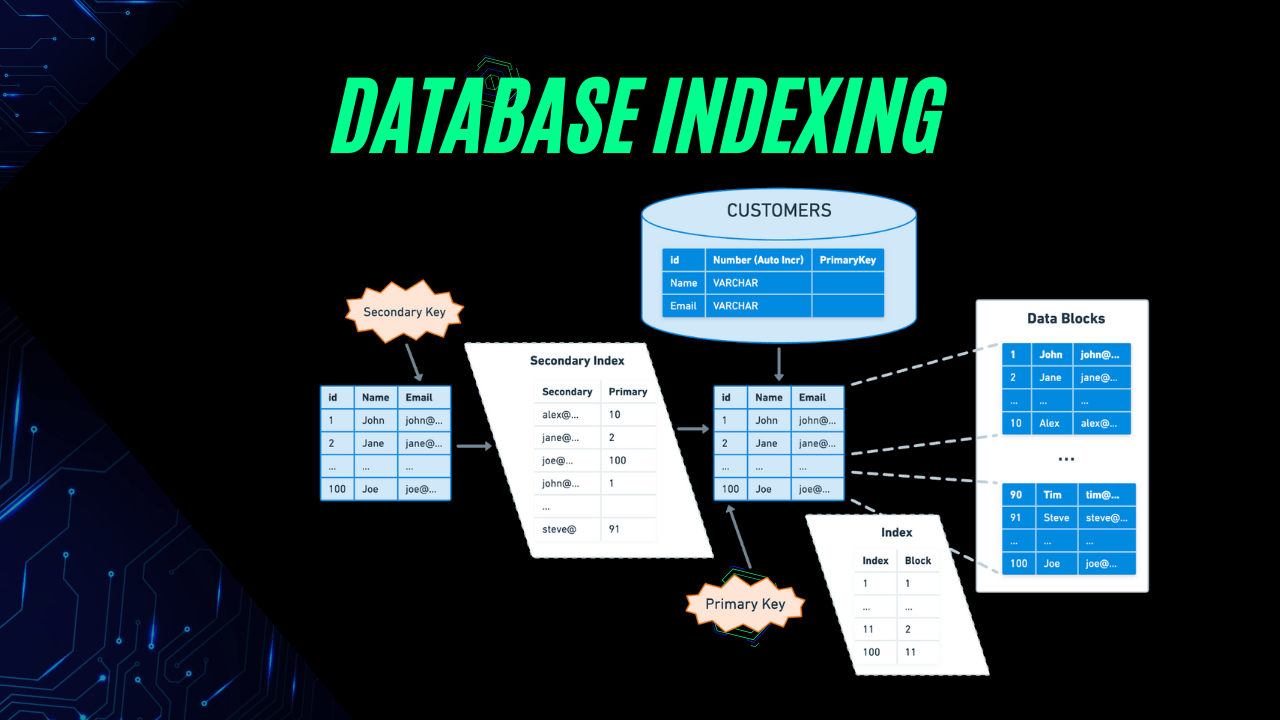
You are not the only person who feels like your database is slow and sluggish. A large number of developers and businesses experience performance problems when their data increases. The good news? The proper database indexing tips will enable you to increase query speed dramatically, server load, and provide a seamless user experience. At workvix.com, we think that the secret of scalability is good database design–and that the weapon you need is indexing.
This article presents nine database indexing tips in practice and proven to be effective regardless of the kind of database you are working with MySQL, PostgreSQL or SQL Server. You will know by the end how to get the best out of your indexes and future-proof your database.
Database Indexing Tips

The importance of Database Indexing.

Database indexing is rather the table of contents of a book, which assists the system in finding what it is looking after. In the absence of good indexes, any query will be converted into a full-table scan, which is a waste of resources and slows down your application.
The advantages of indexing well are:
  • Quick queries: Indexes placed in the right location cut down the time of querying the data tremendously.
  • Greater scalability: With increased data, the performance remains the same.
  • Cost savings: Optimized queries are less resourceful on the server.
It is important to master these database indexing tips whether you are a developer, data analyst or a business owner.

Select the Right Primary Keys.

Each table must have a primary key, which must be concise, singular and constant. A numeric or automatically generated key is preferable to long strings as, having less key size, indexes are more efficient and searches are faster.

Make Composite Indexes where necessary.

Composite indexes are one of the most useful tips of indexing a database in order to use multiple column filters of the query to the database. This technique enables matching rows to be retrieved in the shortest time possible without searching a complete table.
Do not forget that the sequence of columns is important. Always place the selective column (that is the one that will filter the highest number of data) at the top to achieve the best results.

Study Your Query Patterns

Before developing new indexes identify what queries are commonly used and how long they take. First concentrate on maximizing these. This eliminates the possibility of generating redundant indexes which occupy space and slow the update of data.

Do not create too many Indexes.

Although indexes enhance the performance of reading, excess indexes may slack the performance of write operations such as insert, update and delete. The most practical is to only make the index of the queries that you care about the most.

Index Queries that are covered by Design.

Amongst the best database indexing tips is ensuring that your indexes contain the columns required by a query. This means that not all results that the database finds have to be returned by traversing the main table again and this enhances speed even more.

Database Indexing Tips

Have Small and Efficient Indexes.

Smaller indexes result in quicker lookups. When indexing a text column, do not index the text as a whole wherever feasible, only index the maximum length of unique data to ensure that the index remains short and thus performs well.

Keep and Rebuild Indexes on a regular basis.

Indexes might become fragmented with time and this can happen more often when your database is updated frequently. Making frequent checks, analyzing and updating your indexes allows you to maintain optimal indexes and ensures the same level of performance.

Principles Use Filtered or Partial Indexes.

Filtered indexes can also save storage space and provide better performance in case your queries are only interested in a particular sub-set of data, such as active users or pending orders. This is among the most effective tips of indexing a database when it is large and busy.

Monitor and Adjust Over Time
Indexing is not a single process. Your data and query patterns are likely to change, so re-consider your indexing strategy. Use the monitoring tools to monitor slow queries and make changes to your indexes accordingly.

Common Mistakes to Avoid

Even in the right manner, most individuals commit the following mistakes:
  • Forming indexes on the less commonly used columns.
  • Leaving the old indexes or duplicate indexes.
  • Using auto-generated indexes of ORMs only.
  • Disregard the performance effect on importing large data.
By preventing such errors, you will ensure that your database is lean, fast, and easy to maintain.

The use of Optimized Indexing is beneficial to your business.

Good indexing is not simply a technicality – it is a business benefit:

  • Better user experience: Response time is increased and this keeps the users active.
  • Improved search engine optimization: Search engines reward fast loading of pages.
  • Reduced expenses: Efficient queries imply that you are able to manage more traffic using less.
These tips on database indexing will enable you to directly enhance performance and lessen overhead on your business applications.

Learn More and Stay Ahead

To learn more about databases, read expert tutorials and guides at studycreek.com or read academic research and case studies at dissertationhive.com.
To optimize your database practically, quickly and cost-effectively, visit workvix.com to have an expert on your side.
Database Indexing Tips

Final Thoughts

These nine database indexing tips will assist you to have a faster query, reduce the cost of the server and have a system that is more scalable. The point is that you should monitor your performance on a regular basis, change your indexing approach with the expansion of your application, and adjust it to the changing trends of data.
Keep it proactive and you can be sure that your database will remain very active and providing your users with the best of the best performance and keep your bottom line satisfied.