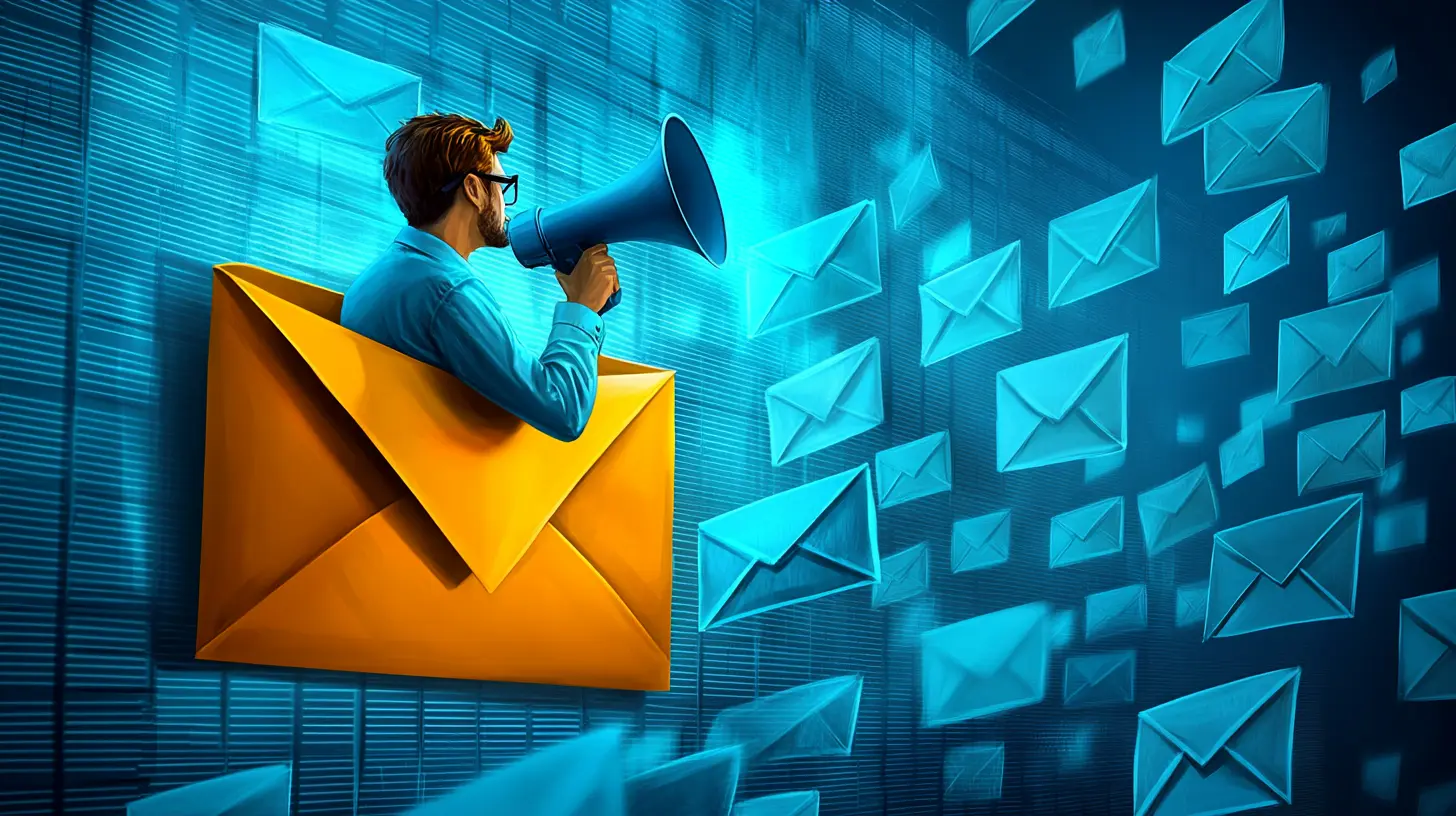

Millions of folks wake up in the morning and open their email inbox first thing in the morning – a digital battleground in which promotional messages engage in war against valuable attention items like important work requests, family communications and the reminder of the single subscription they vaguely recall signing up for one night during yet another online shopping frenzy. Amidst all this, your marketing mails are either soaring like heroes to their inbox or getting cold-banished to the spam section.
The hard reality is this: an overwhelming majority of marketing emails are something like a visit to the dentist that you’d forgotten to make. They come unexpectedly, take time beyond their stay and leave the recipients slightly violated. However, we also have the emails that some people actually open, and – miracle of miracles – respond to. Being in these two extremes is not a matter of chance, but a matter of strategic email marketing presented in the form of useful contacts.
The Great Email Resurrection (Reports of Its Death Were Greatly Exaggerated)
At least once every few years we hear some marketing evangelist announcing the death of email marketing, often when they’re trying to sell us one of the next hyped up communication mediums. “E-mail is dead!” they cry. “Everyone’s moving to [insert platform of the week]!” Such prophesies have been going round even more than news concerning the next iPhone, and they hold as much truth as weather revelations of next month.
The fact is that email marketing is not dead, it changed. Like a digital Darwin finch, it evolved to exist in ever more competitive attention ecosystems. Email marketing today is more advanced, more targeted, and ironically, it’s more efficient than ever.
Although the algorithms of social networks turn over more often than fashion collections and the cost of paid advertising grows as much as the price of a liter of gas, email marketing has the stability of a Swiss clock and the ROI of the right cryptocurrency investment (without having a heart attack). Studies consistently show email generating $36 for every dollar spent, which is better returns than most people get from their college education.
The Spam Folder Cemetery (Where Good Intentions Go to Die)
Let us take a moment of silence, in honor of the billions of marketing emails that are rotting in spam folders around the globe; sacrificed at the altar of bad subject lines, suspicious sender names and sinister-looking content. These digital casualties represent businesses that confused shouting with communicating, volume with value.
The inbox to spam path is a sad but foreseeable one. It begins with subject lines that look like they were written by a person who learned English by watching infomercials. Next is material that sounds as though it was written by a committee of robots who’ve never engaged in human dialogue. Then there’s the timing – emails that someone may receive with the thoughtfulness of a telemarketer calling you during dinner.
Email marketing knows better that it is not allowed to assume that emails would go straight to inbox, but earns placement. It needs to establish trust by the provision of regular values, not violating subscriber wishes and by the adoption of information, which people really like to get.
The Psychology of Inbox Behavior
Modern email recipients have developed sophisticated filtering systems that would make airport security jealous. They can sniff out promotional content quicker than a foodie can spot day old bread, and their delete keys work more frequently than a teen’s social media accounts.
Effective email marketing operates within the frameworks of this psychology instead of battling against them. Campaigns should feel like useful messages received by reputable and trusted sources and not cunning sales messages by desperate companies. They add value, cultivate relationships and sell lightly and at an angle through storytelling.
The Personalization Revolution
Mass-produced, generic email broadcasts are electronic versions of the nondescript expressions sent along with mass-produced greeting cards – technically effective but emotionally uncharacteristic. Contemporary email marketing uses data intelligence to design an experience that feels bespoke to the recipient, yet is experienced by thousands at a time.
It’s not only about putting the first name of a person in the email subject line. It’s the idea of knowing about behavioral patterns, past purchase histories, and preferred mode of engagement so as to present content that’s meaningful, has a sense of urgency and is perceived as having value so as to ensure that it conveys a sense of relevance to each particular recipient.
The Mobile Optimization Reality
This is a statistic that may change your mind on your email strategy: more than 70 percent of the emails are being read on mobile devices, during which users are normally multitasking or avoiding some sort of responsibility. Unless your emails are gorgeous and flawlessly presented on mobile devices, you may as well hang a sign that reads “Desktop Users Only” on your marketing effort.
Optimizing email designs to fit the mobile environment is not merely a case of shrinking things down, but rather a chance to reimagine how your message will be interacted with in the world of thumbs, distractions and measured microseconds.
The Automation Advantage
Email automation is always like having a marketing assistant that doesn’t sleep, doesn’t have days off or doesn’t screw up and send your personal emails to all your customers. Automated email sequences can be used to nurture leads, onboard new customers or re-engage dormant subscribers with the same personality as your best salesperson.
The secret is developing automations that aren’t mechanical but rather elevated by having the smart touch of human nature customized to subscriber actions with all the real honesty of brand voice and value of authenticity.
The Measurement Revolution
There is an advantage of being able to quantify any interaction compared to other forms of advertising where success is often quantified by irrefutable brand awareness figures. The open rates, click-through rates, conversion tracking and behavioral analytics provide a goldmine of intelligence that not only is used to inform subsequent email campaigns but also more generalized approaches to marketing.
This statistical perspective turns email marketing into a science instead of a guessing game and enables ongoing optimization of your mailings to keep them as efficient as possible, based on actual subscriber behavior as opposed to hypotheses created by marketing personnel.
Ready to transform your email marketing from inbox irritant to customer magnet? Explore the comprehensive email marketing services at Workvix.com and discover how strategic communication can turn your subscriber list into a revenue-generating powerhouse.
Because in today’s highly competitive digital landscape, the emails aren’t only sharing info, they’re creating relationships, selling and representing the brand in the most intimate digital space – your customer’s inbox.