

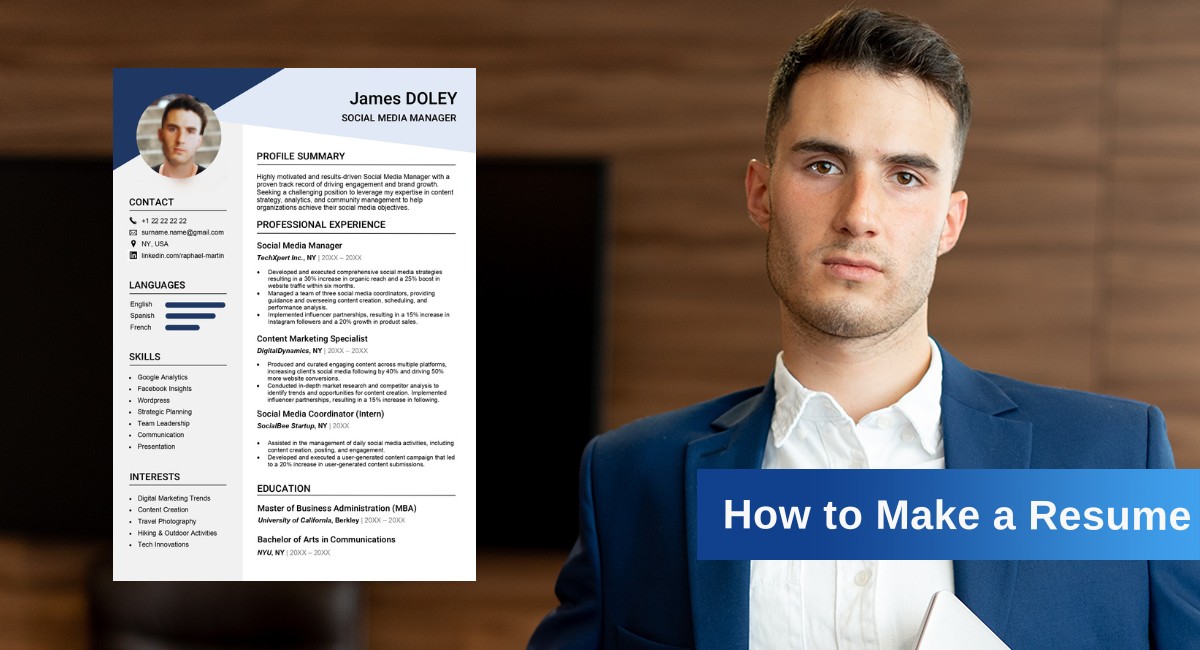
How to write a resume that will win you an interview: 11 proven, high impact steps– WorkVix.com.
Get tips on how to write a resume that passes ATS, impresses hiring managers and gets interviews. Instructions + tutorial by WorkVix.com.
It requires tact, reputation, and polish to get interviews nowadays. And in case you have been wondering how to write a resume that always comes with a call back, you have come to the right place. You can use this guide as a more practical, conversion-driven playbook to follow today–and when you are ready to make a serious impact, the experts of WorkVix.com can take your resume beyond good to memorable.
Now, before we go into it, here is the answer on the short of how to write a resume that works. Target relevancy, quantifiable action, and keyword relevance. Then design with humans in mind, then design ATS, then make each line justify your worth.
Short Answer: how to write one paragraph resume?
To learn to write a resume, to keep it as simple as one or two pages, to start with a stinging summary, to weigh skills against the opening, to measure accomplishments in dollars, to reflect back on the posting important keywords, to lay it out neatly and to add extras (certifications, awards) to support the suitability. Send a customized version in each position to maximize the conversions.
Step-by-Step tutorial: 11 effective Steps on how to write a resume.
1) Describe your intended role and worth.
The quickest method to determine how to create a resume that will impress is to choose a job of interest and reverse engineer it. Determine the three best results that the position is seeking (e.g., revenue growth, uptime, student outcomes). Your resume must show that you have produced those results previously.
2) Select an appropriate structure (reverse-chronological > hybrid > functional)
No one correct format to write a resume, but reverse-chronological is the safest default since it demonstrates momentum. Hybrid is the format to use when you are moving, and functional only when it is required to reduce the emphasis on gaps.
3) Draft a 3-4 line professional summary.
The main real estate in resume strategy and impact is a summary. Instead of the outdated objective, use a result-focused statement that identifies what you do, what you do best, and at least 1 or 2 things that you are proud of.
Example summary
9+ years of experience optimizing B2B SaaS adoption as a Senior Product Manager; drove two products to $8M ARR through GTM, increasing activation by 24 percent through experimentation and data-driven roadmaps.
4) Construct a skills block to reflect the job.
One of the fundamental actions to write a resume is to clean up a section of tight skills. Individual hard skills (Python, GA4, Figma, FP&A) and domain tools (Salesforce, HubSpot) and soft skills (stakeholder management). Normally compare them to the image of the job to augment ATS.
5) Turn tasks into outcomes using the CAR technique.
6) Be a number person (quantity is better than description)
7) Be optimized to ATS without readability loss.
8) Clean style, scan and contemporary.
9) customize every app within ten minutes.
10) Include paragraphs that make you stand out.
- Certifications (e.g. PMP, SHRM-CP, AWS SAA).
- Praise (President’s Club, Dean’s List)
- Publications, speaking, patents
- Board member (volunteer leadership, treasurer).
- Frameworks/languages (Spanish B2, React)
11) Evidence, testing and professional assistance.

The Best Resume Formatting (ATS and Human are both fond of it)
- Header Name, mail, phone, LinkedIn / portfolio.
- Summary (3-4 lines): Job, ability, work.
- Core Skills: 10-16 targeted skills (grouped).
- Experience: 3-6 bullets per position, reverse-chronological, CAR format, measured.
- Education: Degree(s), school, graduation year; major coursework (early careers).
- Certifications & Awards: Only reinforcement fit ones.
- Extra: publications, community leadership, Projects, languages.
Formatting tips
- Use 10.5-12 pt body type, 0.5-1.0 inch margins.
- Name of the file: Firstname-Lastname-Resume-Role.pdf.
- Only save as PDF unless a post requests DOCX.
- Do not add a photo except if local standard.
Keyword Strategy: how to write a resume that gets past ATS.
- Pull between 5 and 10 target posting; point out repeated nouns and verbs.
- Insert the phrases that are most repeated in your Summary, top bullets, and Skills.
- Be precise with words where possible (e.g. supply chain optimization, not logistical improvement).
- Cramming a block of keywords down there.
- Naming non-standard job titles that ATS will not understand.
- Covering the text with white fonts (generates spam).
- This fit mentality is literally the way to write a resume to pass ATS and convince humans.
Examples by Career Stage (how to write a resume that works)
Students / New Grads
When learning how to write a resume with little experience, start with Education and Projects. Point out internships, capstones, and quantifiable results of classes.
Project bullet: Developed a forecasting model (Python, scikit-learn) which optimized MAE by 14 percent on 80k rows; shared results with department head.
School your flash with DissertationHive.com where you can get firepower to research your paper, and StudyCreek.com where you can get your paper written well enough to support the story you know you have on your resume, both make the story you know on your resume that more convincing.
As a student, one of the clever methods of knowing how to write a resume is to bring projects to a level of quantifiable output.
Career Changers
When professionals are skilled at resume writing in a pivot, you should convert the previous victories to the language of the new position. Re-name tools/skills to their present equivalents and put emphasis on portable accomplishments (process improvement, leadership, revenue impact).
To the career changer, the answer to the question of how to write a resume is the re-packaging of previous successes in the vocabulary of the target position.
Senior Leaders
It is an understanding of how to position an executive resume, i.e., demonstrate scope (budgets, org size), strategy (vision, roadmaps), and outcomes (EBITDA, NPS, market share). Add a chosen achievements list before experience when you have spearheaded major changes.
To executives, the question of how to write a resume is to demonstrate scope, strategy and shareholder impact.
Copy-and-Paste Templates (accelerate how to write a resume)
Impact bullet formula
Summary template
Skills block example
Get Your Resume Found Online (indexing works)
- Write descriptive H1/H2s that have to have how to write a resume in them.
- Avoid using image/ PDF text when possible instead use HTML text then the search engines can traverse the content.
- Include links to the related projects inside and a link to WorkVix.com to get credibility signaling.
- Adding simple JSON-LD to Person/Article to enhance rich understanding should be considered.
- Posting on your site, the headers that contain information on how to write a resume assist search engines in understanding the page content.
10 Things That Silently Kill Great Resumes.
- Unnumbered indistinct bullets.
- Thick paragraphs; not scannable.
- Template overdesign that crushes ATS parsing.
- Verbatim job descriptions taken out of HR systems.
- Giving a list of all the jobs since high school (irrelevant noise).
- Inconsistent tense/formatting.
- Spelling (typos, mismatch of American/British spelling).
- There are now only keywords in Skills, and not in bullets.
- Failure to customize to each application.
- Saved as resumefinalv9(2).pdf.
Checklist (your weekly job-search routine)
- Name 3-5 roles; point out keywords that are repeated.
- Update your overview to reflect the results of the role.
- Put your 6-8 best bullets back in order to fit the posting.
- One more quantified win in the previous quarter.
- The evidence of the ruler mindset: improvement on each pass.
- Export to PDF; layout and links check.
- Follow up outcomes; in case response rate is less than 10, repeat with WorkVix.com.
Why WorkVix.com (and why call us)
- Extensive key word and role research in your target market.
- Writing at the executive level that conveys volume and value.
- ATS-reliable, modern readable formatting.
- Optional cover letter and LinkedIn refresh that makes your message stronger.
FAQs: yes or no questions in large amounts.
Q1: Which one is better one page or two pages?
A: 12-pages is acceptable to most professionals. The more intelligent way of approaching the question of how to write a resume is to only include that which is fit-quality, rather than length.
Q2: Should I include a photo?
A: in most markets, no. Photos can be biased to readers and can mis-lead ATS. Be substance and clarity oriented.
Q3: How many bullets per job?
A: Three to six is a good range. One should put the most impressive and relevant bullets first when determining how to write a resume.
Q4: Can I use AI?
A: Yes–brainstorming and drafts by AI. However, to be credible and precise, it must be edited by humans (and in this regard, WorkVix.com excels).
Q5: Do I actually have to customize each time?
A: Short answer: yes. The sustainable version of writing a resume is maintaining a master document which you tailor to each position in 10 minutes.
Ready to win more interviews?
You have learnt the proper way to write a resume; you have a structured, quantified, customized and ATS-sensitive resume. The experts at WorkVix.com can turn your draft into a high-performing asset, should you need some practical assistance. And while you are upgrading the academic qualifications, go to DissertationHive.com to get your research done, and StudyCreek.com to have your story written better, more clearly, and that profile boosted.
When outcomes are important, you should not simply learn how to write a resume, but work together with professionals who live and breathe it.