

Normalization vs Denormalization: 7 Practical Guidelines that Prove this Understanding is Crucial in the Workplacevix
The databases and information system topics usually raise this question among students and other aspiring IT specialists; what the difference between normalization vs denormalization is? The two ideas are the foundation of database design and data managements approaches. Not only do they ensure you excel academically, learning them also ensures that you have a leg up in the real world as well.
Throughout this guide, we will define normalization vs denormalization in a professional but easy to understand language to enable you gain actionable insights on how to succeed in your academic and professional career. Workvix brings this to you–your source of student-centred IT and technology information.

1. Introduction Why Normalization vs Denormalization Matters
During construction or maintenance of the databases, database designers ought to choose on how to structure data in such a fashion. The opposition of normalization vs denormalization is two side aspects of same coin:
• Normalization is concerned with eliminating redundancy in data and consistency.
Denormalization has performance as a priority and facilitates more complex join reduction and faster query.
The knowledge of normalization vs denormalization is critical, as any database in the real world, as a university project or an enterprise system, is in such balance. Awareness of the timing and its method of implementation determines whether your database is efficient, reliable and scalable.
2. Draw a Line (Normalization).
The discipline of structuring a database to reduce the duplication of information and to ensure data integrity is called normalization. It uses a set of guidelines, called as normal forms to organize tables and relationships.
Main characteristics are:
• Eliminating multiple data to have the information stored in a single location.
• We defined relations between tables by primary and foreign keys.
• Increasing accuracy and consistency through elimination of the threat of conflicting data.
In the academic notation, normalization means that the models in your databases capture real world entities in an clear and logical fashion. As far as students are concerned, normalization principles are important in writing dissertations or projects that will need structured information. The websites such as dissertationhive.com give great advice on the formal database design principles.
3. Denormalization Defined.
The combination of data or introduction of redundancy to speed is known as denormalization. Rather than strictly adhering to all the normal forms, designers merge tables together or replicate some information in order to make complicatedqueries more manageable.
Its major characteristics are:
• Lightning speed networks since lesser joins are required.
• A better performance on read-intensive systems like reporting dashboards.
• More storage needs as a result of redundant data.
More or less, denormalisation sacrifices data integrity in the name of speed and efficiency. It is really important to learn how to balance the two sides getting the normalization and denormalization working when working on projects that require query performance like analytics, or big data. Practical examples can be located at studycreek.com, in which applied database design techniques are demonstrated.
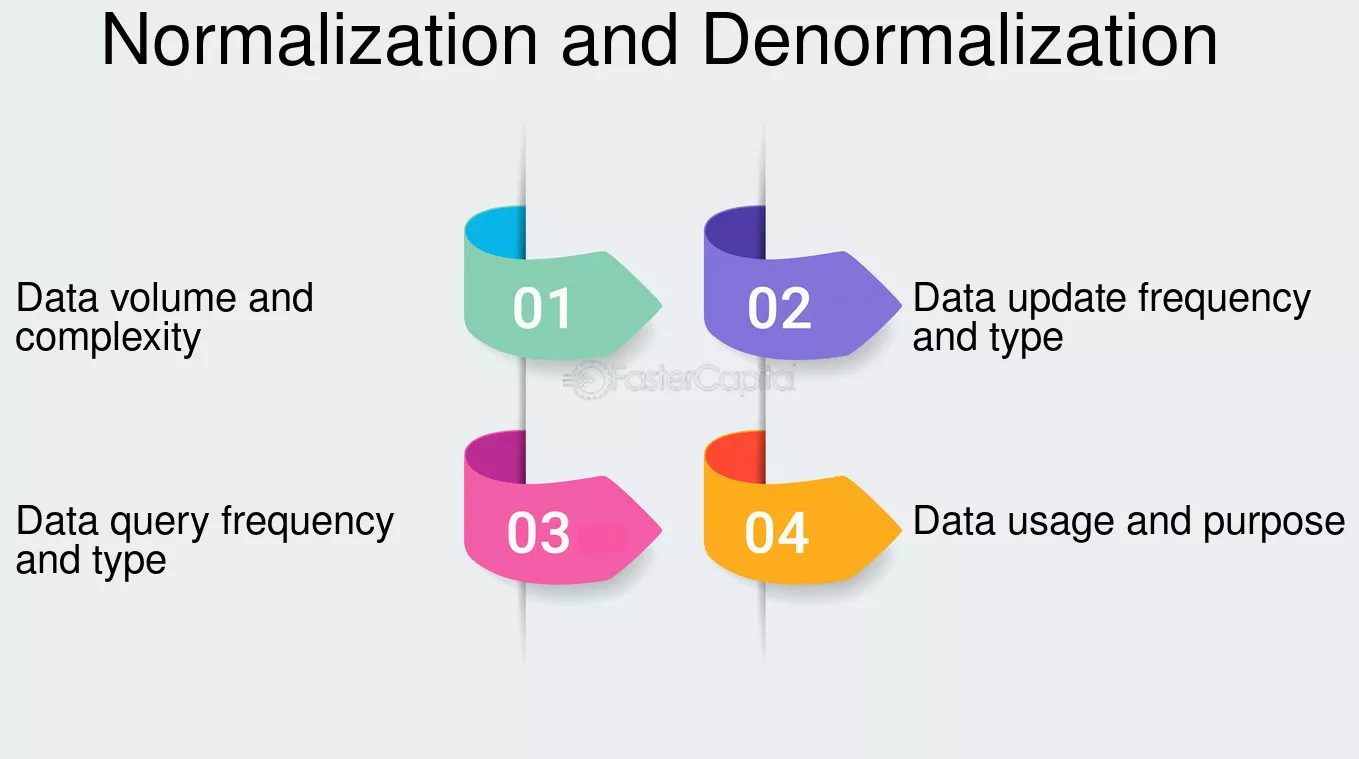
4. The major differences between Normalization vs Denormalization:
Comparing normalization vs denormalization, it is easy to see the difference:
• Objective: Normalization gives data consistency as a priority; denormalization gives speed as a priority.
• Space: Normalized databases are small; bigger space is consumed by the denormalized databases.
• Data Integrity: Normalised structures minimize anomalies; denormalised structures are likely to keep a different version.
• Performance: Normalization can reduce performance of read operations in joins; denormalization reduces retrieval performance and can complicate updates.
• Use Cases: Normalization can be used with transactional systems (like banking etc.; denormalization can be used in analytical systems (like data warehouses etc.).
When students and information technology professionals become aware of such trade-offs, they become confident in the system design process, both at the academic and business setting.
5. Normalization Use when
The best candidates of normalization are:
• Transactional systems: in which the correctness of data is vital.
• Applications whereby there is a need to frequently update to harmonize information.
• Databases having scarce storage resources in which duplication removal is a good idea.
As an example, normalized tables in the student information system means that no part of the information (such as course names or student details) is repeated in more than one location. This lessens the chances of mismatch of records, and will also make the maintenance of the database easy.
6. Denormalization When to Use
Denormalization is suited best to:
• Applications with read-intensive operations in which the speed is more relevant than the strict consistency.
• Reporting and analysis conjoined that are used when it is likely to conjoin the data of several sources.
• Large-scale data sets in which the cost of a join operation would otherwise be prohibitive.
As an example, an e-commerce reporting dashboard might denormalize sales data in order to accelerate queries that aggregate daily or monthly sales. When this happens, additional storage cost is offset by performance benefit.
7. The balance of Normalization vs Denormalization How
Proper database design does not necessarily subscribe to a single technique to follow- it is a combination of the two. This is how one can make wise decisions:
1. Know your data needs: Knowledge of what is more important: accuracy or speed.
2. Normalized start: Have a clean normalized foundation to have data integrity.
3. Selective denormalization: Don t introduce redundancy everywhere; it only needs to be introduced where performance problems occur.
4. Track and tune: Employ the use of profiling tools which will enable an analysis of how the query is performing and make modifications where necessary.
5. Utilize professional help: Websites such as workvix.com can provide tips and tutorial as to how to do these effectively.
8. Possible Misconceptions of Normalization vs Denormalization
“Better it is the normalization later on.” It does not have to be so, however: by over-normalizing we can encumber systems needlessly.
Denormalization is simply bad design. No, this is a conscious theatrical stylistic strand: an optimization of the given scenario.
“Only one approach has to be selected by databases.” Realistically, a combination of the two is applied in most databases.
Becoming aware of these myths, allows the students to think logically and not emotively about normalization vs denormalization.
9. For a Hands-on Learning of Normalization vs Denormalization
In order to operate these concepts, students can:
• Sample projects: Get some work done with denormalized databases and then create the denormalized structures where necessary.
• Have open datasets: Use cases: Test these techniques on real data found on sites such as Kaggle, to see the effects.
• Find long instruction descriptions: Sites with academic orientation such as dissertationhive.com elaborate on theory, whereas studycreek.com illustrates practice.
• Readiness: Use either MySQL, PostgreSQL or Mongo DB and practice both techniques and compare corrections of either.
Theory and practice will help you and understand normalization vs denormalization and not regurgitate definitions.
10. Overview: The importance of this knowledge
To recap:
The normalization maintains consistency, accuracy and it is less redundant.
Denormalization provides performance gained at the expense of extra storage and possible inconsistency.
Normalization Vs definition fantasy
Normalization vs denormalization is one of those skills that will always pay off both when you write a research paper and when you sort out the internship, or when you want to become an overall technician.
11. Call to Action: read more at workvix
Would you like to learn more about normalization vs denormalization on practices and by specialists? See the workvix.com site to go to student tutorials, and professional advice.
To learn more some more scholarly depth, see dissertationhive.com to read the theory, and studycreek.com to see the practical example. Collectively, these resources provide you with resources with which to be a master of database design, research, and being prepared in your career.