

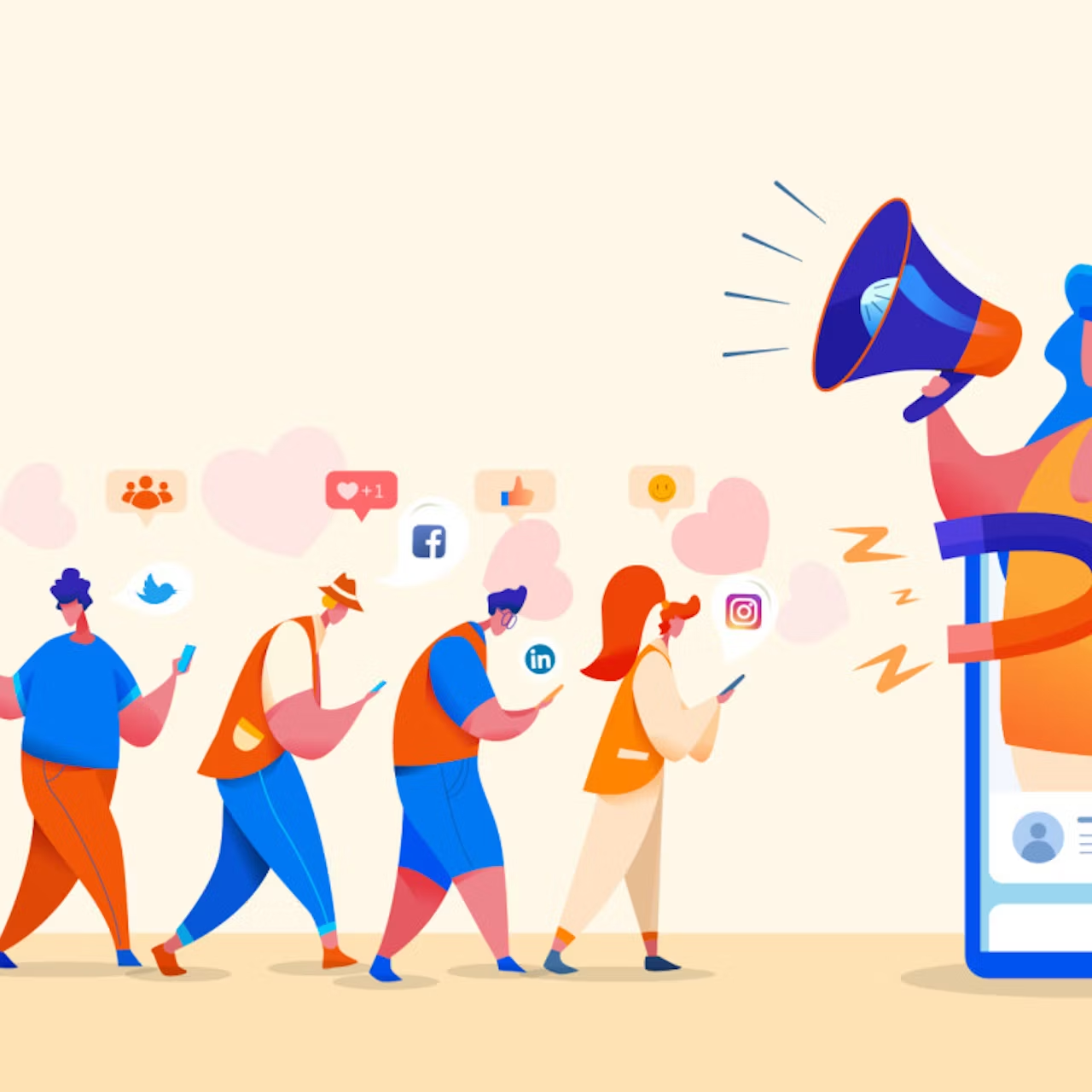
Imagine that you’re scrolling aimlessly through your social media feed at 2 AM (we aren’t judging, we all have that habit), your thumb moving faster than your thoughts, and all of a sudden, BOOM! An eye-catching graphic message hits you mid-way through your scrolling. You stop right there, you read the caption and perhaps even interact with it. In the meantime, seventeen other posts have slipped assumedly into an infinite digital abyss, relegated by the unforgiving scroll-and-ignore algorithm controlling our modern attentions.
Welcome to the bloodshed of social marketing in the gladiatorial arena where graphics are given a life period of just about 0.4 seconds to warrant their existence or be condemned to obscurity. In this brutal battlefield of bite-sized content, your visuals aren’t just competing with other businesses—they’re competing with cat videos, political rants, and whatever existential crisis your college roommate is having this week.
The Great Attention Economy Heist
Social media platforms have essentially gamified human attention, turning every scroll into a slot machine pull where the jackpot is engagement. Your graphics are either contributing to this dopamine-driven economy or becoming casualties of it. There’s no middle ground, no participation trophies, and definitely no second chances for mediocre design.
The harsh reality is that people are scrolling through their feeds with the focus of a caffeinated hummingbird and the patience of someone stuck in airport security. Your graphics need to communicate their entire value proposition faster than it takes to sneeze—and be more compelling than whatever TikTok trend is currently hypnotizing the masses.
It’s not about being stylish and pugnacious (that’s the online version of the shouty person in a coffee shop). It’s the art of being tactically impossible to resist giving you a satisfying visual disruption instead of a frustrating one.
The Template Apocalypse (Now Featuring Stock Photos That Have Seen Better Days)
Let’s address the elephant in the digital room: the template epidemic that’s turning social media into a visual wasteland of sameness. There’s something tragically appealing about downloading a “professional” social media template and thinking you’ve solved your marketing problems. It’s like buying a karaoke machine and expecting to become the next American Idol.
The problem with template-based graphics goes beyond mere aesthetic mediocrity. When your social media looks identical to your competitors (minus the logo swap), you’re not building brand recognition—you’re contributing to brand confusion. It’s visual white noise disguised as marketing strategy.
Professional social media design understands that memorable brands require distinctive visual voices, not chorus lines of identical templates singing the same forgettable tune.
The Algorithm Whisperer Phenomenon
Here’s where social media design gets genuinely complex: different platforms have different personalities, attention spans, and behavioral patterns. Instagram users browse like art gallery visitors, taking time to appreciate aesthetics. It’s users on LinkedIn scrolling away like a CEO trying to be relevant in their career. TikTok users behave as though they’re overdosing on caffeine needing satisfaction and entertainment immediately.
These are the languages used by professional designers to exhibit graphics that not only appear good to everyone but also work in a specific way. It’s like being a cultural translator who ensures your message doesn’t get lost in digital translation.
The Engagement Psychology Laboratory
The contemporary construction of social media goes by mature psychological principles that would’ve warranted the likes of behavioral scientists. The color specifications virtually induce emotional reactions before rational thinking takes place. Typography choices communicate personality traits instantly. The eye follows information to a specific layout that has been carefully choreographed in sequences sure to boost retention and action.
The best social media graphics will produce what marketing masters refer to as “cognitive resonance”: people absorb visual cues and immediately associate them with some kind of positive thoughts about your brand, products or services. It’s subliminal persuasion wrapped in attractive packaging.
The Brand Consistency Conundrum
The ability to keep the look consistent among many platforms, but adjusting to the information needs of each one, can be akin to being the United Nations diplomatic translator – you must hold the same idea in mind yet be able to address many languages at once in their visuals.
This uniformity isn’t a matter of taste only; it’s a survival strategy of the brand. When your graphics continue to have a recognizable visual DNA across platforms, you’re creating cumulative brand recognition that’s built on over time. One post will contribute to a bigger visual story building up your brand identity.
The Conversion Conversation
Pretty social media graphics that never lead to action are like traffic-stalled sports cars – something wonderful to see, but a source of annoying frustration in the end. Each graphic detail must support the overarching objective of taking your customers through your marketing funnel e.g. visiting your online shop, buying your products, or remembering your brand when they require your services.
Strategic color psychology, sharp visual prioritization to highlight calls-to-action and design elements that build urgency or excitement to take the next logical step are included in this.
The Investment Reality
Turns out professional social media design isn’t a cost, but a competitive advantage that can be measured. Good design of graphics enhances engagement levels, brand awareness and generates such visual traction that transforms the curious followers into loyal consumer bases.
Ready to transform your social media presence from digital wallflower to scroll-stopping sensation? Explore the comprehensive social media design services at Workvix.com and discover how strategic visual communication can turn your social platforms into customer-converting powerhouses.
Because in today’s attention-deficit digital world, your graphics aren’t just sharing content—they’re fighting for survival in the most competitive visual ecosystem ever created.