

Introduction
The Ethics of AI is no longer a distant vision: it has become a reality and is revolutionizing many industries and sectors such as education, medical care, finance, and everyday life. Although its potential is astronomical, the ethics of artificial intelligence remains one of the hottest discussions in contemporary society. For businesses, educators, policymakers, and students, it is essential to understand how to approach the ethical issues of AI to ensure innovation thrives while minimizing harm.
This article sheds light to seven crucial understandings of the ethics of AI, details how and why it is challenging, risky, and yet how its responsible application can lead to a more credible, inclusive, and more useful future.
1.The Ethics of AI: The Ethical Imperative – Why AI Requires Responsibility
The pace of artificial intelligence is faster than the conventional governance structures. Whether it is automated decision-making or generative AI content production, the ethical challenges are fairness, privacy, and accountability.
Why it matters: AI systems impact the lives of millions of people: in job placement and in lending. Otherwise, those prejudices may facilitate inequality as opposed to resolving it.
Positive approach Businesses and institutions can employ ethical AI frameworks to hold themselves accountable, responsible, and transparent, positioning themselves as reliable leaders.
2. The Ethics of AI: Challenges of Innovation versus Human Values
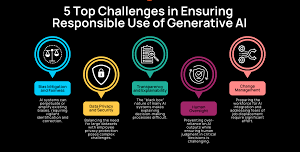
The initial dilemma of AI ethics is how to harmonies the innovation driven by machines with the humanistic values. The major issues are:
Bias and Discrimination – AI models are taught using data, thus in case the data sets are predicted with social bias, the outcome perpetuates the same bias.
Transparency – AI operates as a black box and is therefore very challenging to explain how they work.
Human Oversight -Autonomous systems can make decisions much quicker than humans can control
To eliminate these challenges, AI needs to be programmed with human-in-the-loop systems so that people stay at the center of decision-making.
3. The Four Underestimated Priorities of AI: Privacy to Security
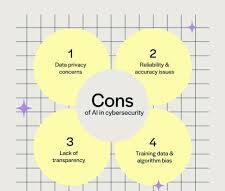
It carries great risks when unleashed in a careless manner
The Problem of Data Privacy: AI is based on immense data gathering and hence concerns about how personal data are acquired and retained and how they are utilized.
Security Vulnerabilities: AI may be used by malicious agents in fraud or cyber-attacks or misinformation campaigns.
Loss of Jobs: Automation may displace entire industries without a level of accompanying retraining.
There must be a balance to responsible use of AI: businesses have a role to protect consumer data, the governments must regulate, and individuals must be more cognizant of their online rights.
4. Developing Trust by means of Responsible AI
Understanding The Ethics of AI is the root of effective AI adoption. Businesses run the risks of damaged reputations, and users become slow to adopt new technologies without trusting them.
Transparency and Exploitability –The AI systems should transparently state how results were reached.
Accountability Bodies – Corporations have to establish who is to war when there is a fault in AI
Inclusive Development – Multicultural teams lower the possibility of prejudice because there are a variety of opinions in the design of the AI.
opportunity insight: As trusted AI will avoid causing any harm, instead it will also stimulate innovation and adoption, embracement.
5. Regulation and Governance: AI Ethical Guardrails

Full-fledged ethical AI policies are being written by governments and organizations across the globe. Among them, there is EU AI Act, frameworks of trustworthy AI in the USA, guidelines of UNESCO regarding AI ethics.
Proactive regulation levels the playing field and makes sure responsible competition.
The international collaboration is required due to the fact that AI technologies are transnational.
Companies which firstly meet ethical requirements take advantage over their rivals and minimize the exposure to legal liability.
6. Accountable Usage in Learning, in Business, and in Society
The ethics of AI extends beyond theory into practical use cases:
In Education– The technology of AI-powered learning needs to be respectful towards the student privacy at the same time inclusivity.
In Business The introduction of the HR systems integrated with AI should not be discriminative in hiring and promotions.
In Society – Governments should make sure that AI complements civic life, and not in order to strengthen surveillance or inequality
Responsible use of AI can enable smarter decisions, greater efficiency and more opportunities across industries.
7. The Way to Go: Building a successful AI world.
The topic of the future of AI will rely on the responsible way we deal with the challenges of today.
The way forward includes:
Moral Education of the Developers – Engineers need to be taught morals of designing.
Interagency Cooperation – Public-private partnerships between business, academia and policymakers have to collaborate in establishing standards.
AI for Good Harnessing the power of AI for good points to the good potential of AI by way of healthcare, sustainability, and education.
Thanks to responsible AI use, we will be able to take advantage of the AI opportunities and safeguard human dignity, rights, and freedom.
Conclusion
The ethics of AI is not a matter of putting in check innovation—it is a matter of governing it. There are challenges and risks, but through transparency, fairness, and accountability, AI can be a positive force that changes the world. Organizations that implement responsible AI are able not only to protect their businesses but also become pioneers of a new era when technology and people can coexist in harmony. For further insights, the World Economic Forum on Responsible AI provides valuable guidance on how companies can apply ethical frameworks in real-world AI systems.
Given that your business or institution is keen on pursuing AI strategies in a responsible way, it is advisable to have your own expert driven platform like workvix.com to work with to avoid falling flat or lagging behind in innovation but at the same time remain responsible and ethically upright.